

The Holodomor was a genocide of the Ukrainian people that took place in 1932–1933.
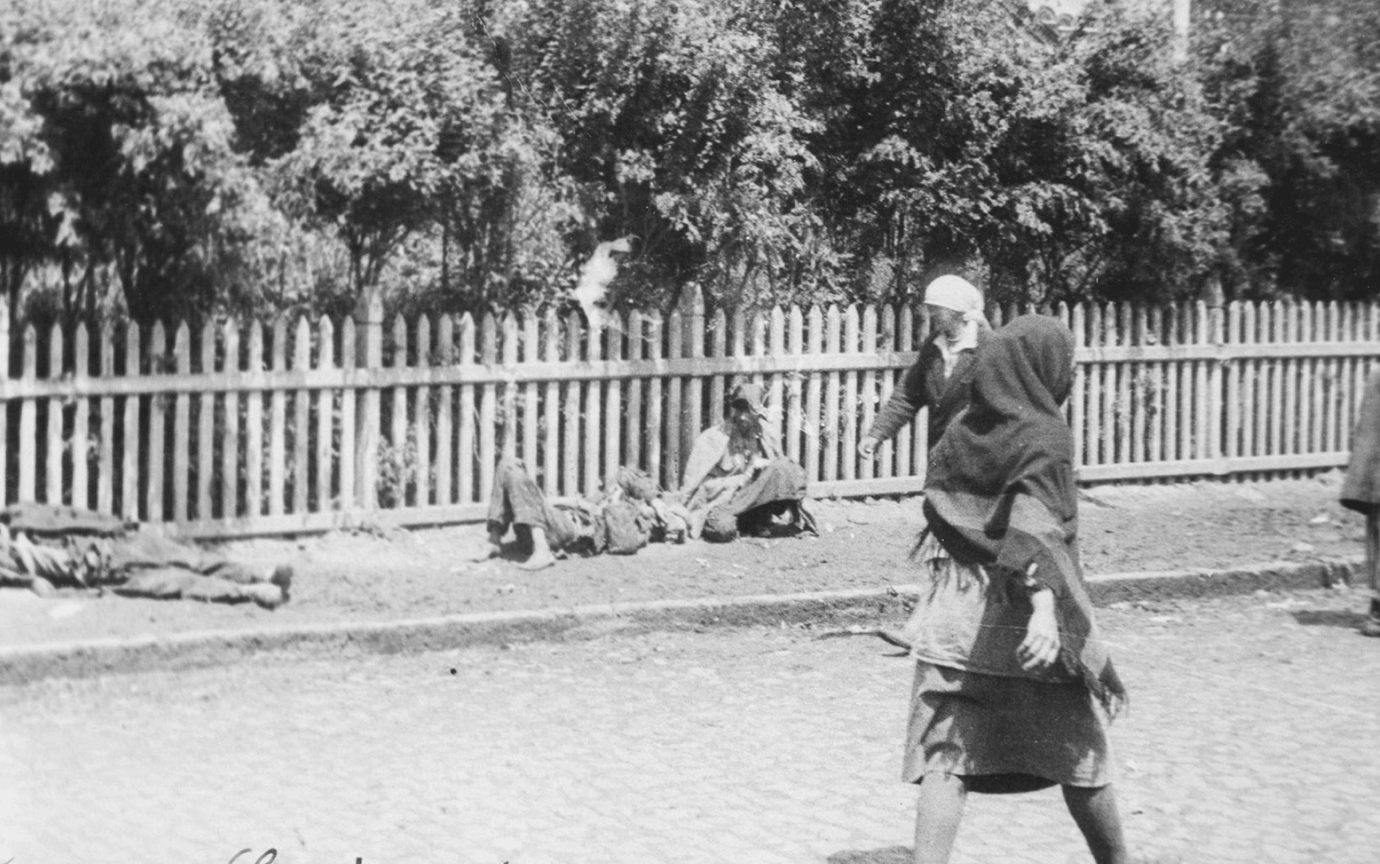
Фото зробив інж. А. Вінербергер. Фотодокументи надані проф. Василем Марочком (Інститут історії України НАН України). – ЦДКФФА України імені Г. С. Пшеничного. Од. зб. 5121.
It was organised by the Communist regime in Moscow with the aim of carrying out the mass extermination of Ukrainians, destroying their national identity and eliminating the foundations of the existence of a distinct Ukrainian nation. The ultimate aim of the Holodomor, as a deliberate policy of the Kremlin, was to permanently secure Ukraine as an integral part of the USSR and to transform (Russify) Ukrainians under the guise of forming a ‘single Soviet people’.
The authorities were aware that the preservation by Ukrainians of their own distinct identity and consciousness left open the possibility of restoring Ukrainian independence and Ukraine’s withdrawal from the Union. The Holodomor was intended to eliminate even the slightest possibility of events unfolding along these lines.
The legal definition of the term was laid down in the Law of Ukraine ‘On the 1932–1933 Holodomor in Ukraine’ of 28 November 2006.
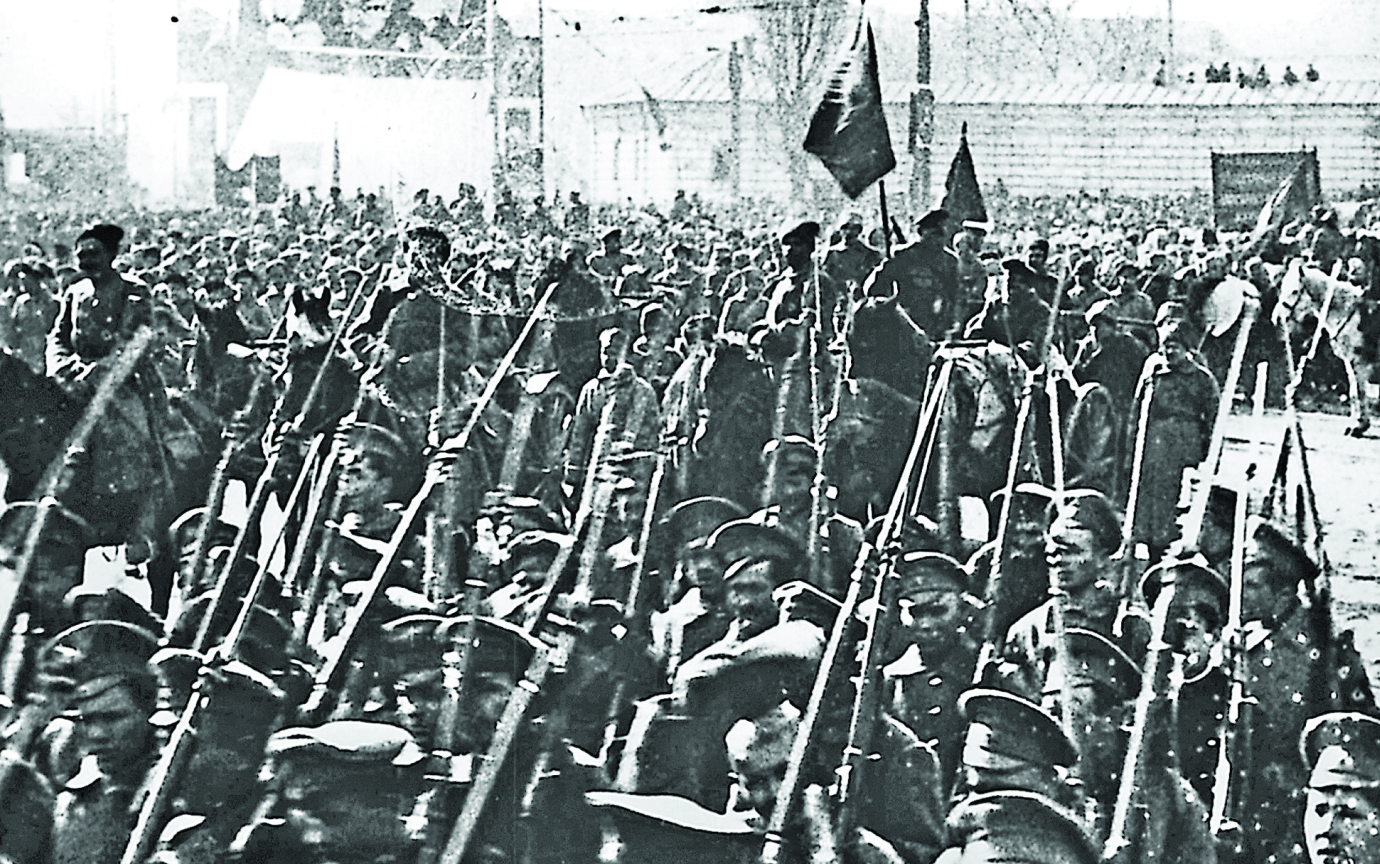
In December 1917, the Russian Communist regime launched a war of aggression against the Ukrainian People’s Republic (UPR), which had been established by Ukrainians following the fall of the Tsarist regime. To conceal their aggressive actions, the Bolsheviks established the Communist Party (Bolsheviks) of Ukraine (CP(b)U), and then, in its name, proclaimed the puppet Ukrainian Socialist Soviet Republic (USSR). This pseudo-state was a sham; its nominal leaders were appointed from Moscow.
The Ukrainian armed forces and partisan units continued to resist the occupiers until November 1921. However, the forces were unequal, and the Russian Communists succeeded in occupying most of Ukraine. In December 1922, the puppet Ukrainian Soviet Socialist Republic was incorporated into the USSR.
In order to win the trust of the population, the Bolsheviks launched a policy of ‘Ukrainisation’ in 1923. However, the rapid development of Ukrainian culture (literature, the press, theatre and cinema) proved to be an unexpected side effect of Ukrainisation for the Bolsheviks. Joseph Stalin realised that the situation had become dangerous, as Ukrainian quasi-statehood could take on real substance.
During the 1930s, nearly 30,000 figures from the fields of Ukrainian education, science and culture were sent to concentration camps
in northern Russia.
The spread of communist ideology was inextricably linked to aggressive atheist propaganda. Seeking to eliminate religion from all spheres of life, the Bolsheviks persecuted ‘representatives of religion’. By 1931, the Communists had closed 80 per cent of rural churches in Ukraine.
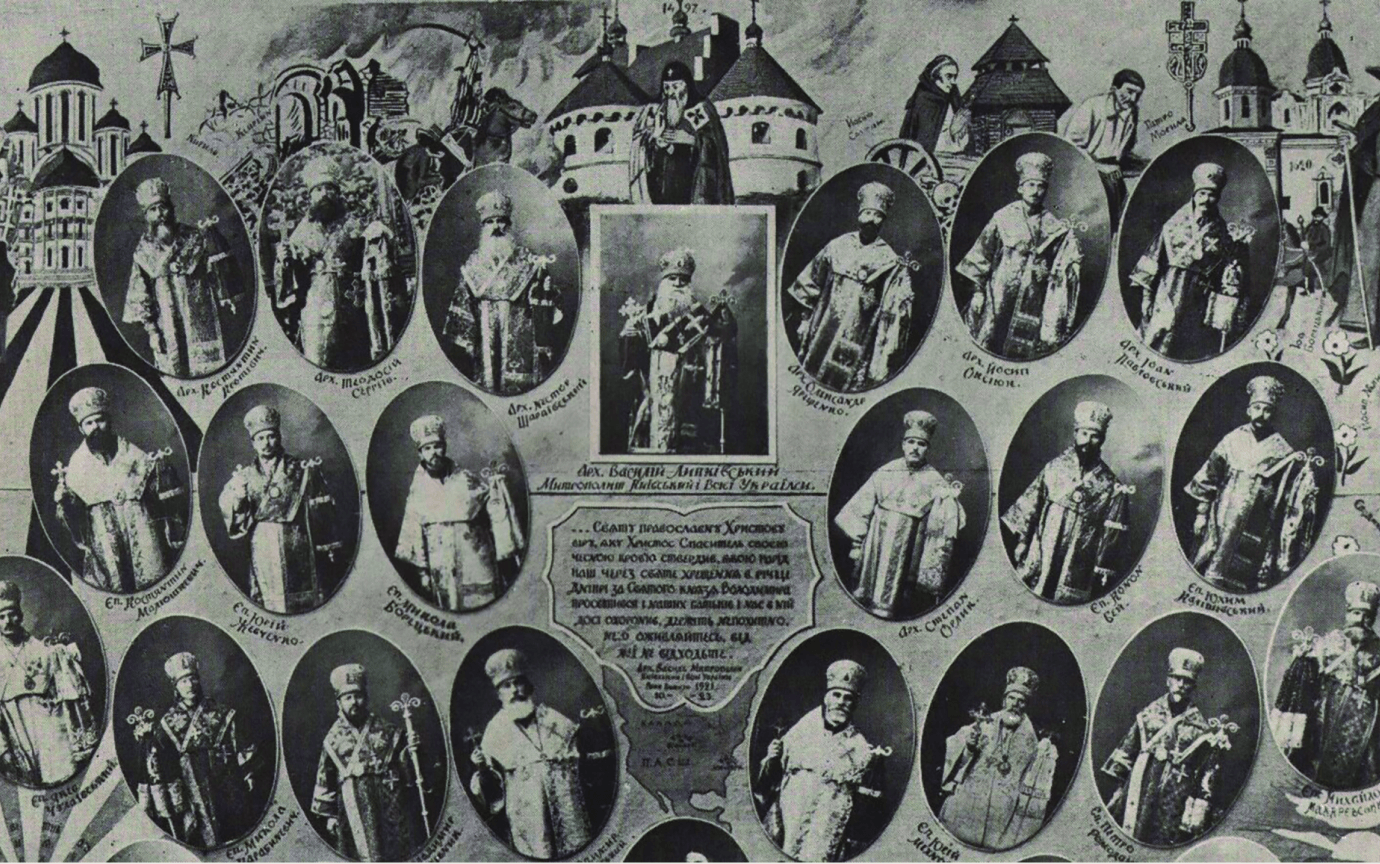
The Ukrainian Autocephalous Orthodox Church (UAOC), led by Metropolitan Vasyl (Lypkivsky), was destroyed.
In 1928, the Soviet leadership announced a policy of collectivisation — the merging of private peasant farms into state-owned collective farms. Each peasant was credited with a certain number of workdays for their labour on the collective farm, for which they were then paid in kind. However, the pay was so meagre that it left the peasant unable to feed themselves and their family.
Peasants were therefore forcibly driven into collective farms through a campaign of terror and propaganda against dissenters, whom the regime labelled ‘kulaks’, ‘bourgeois nationalists’ and ‘counter-revolutionaries’. The punishment for the so-called ‘kulaks’ – who were sometimes branded as such solely because of their political views – was eviction from their villages to barren lands or to the north of the USSR. Their property was confiscated and handed over to collective farms or the rural poor.
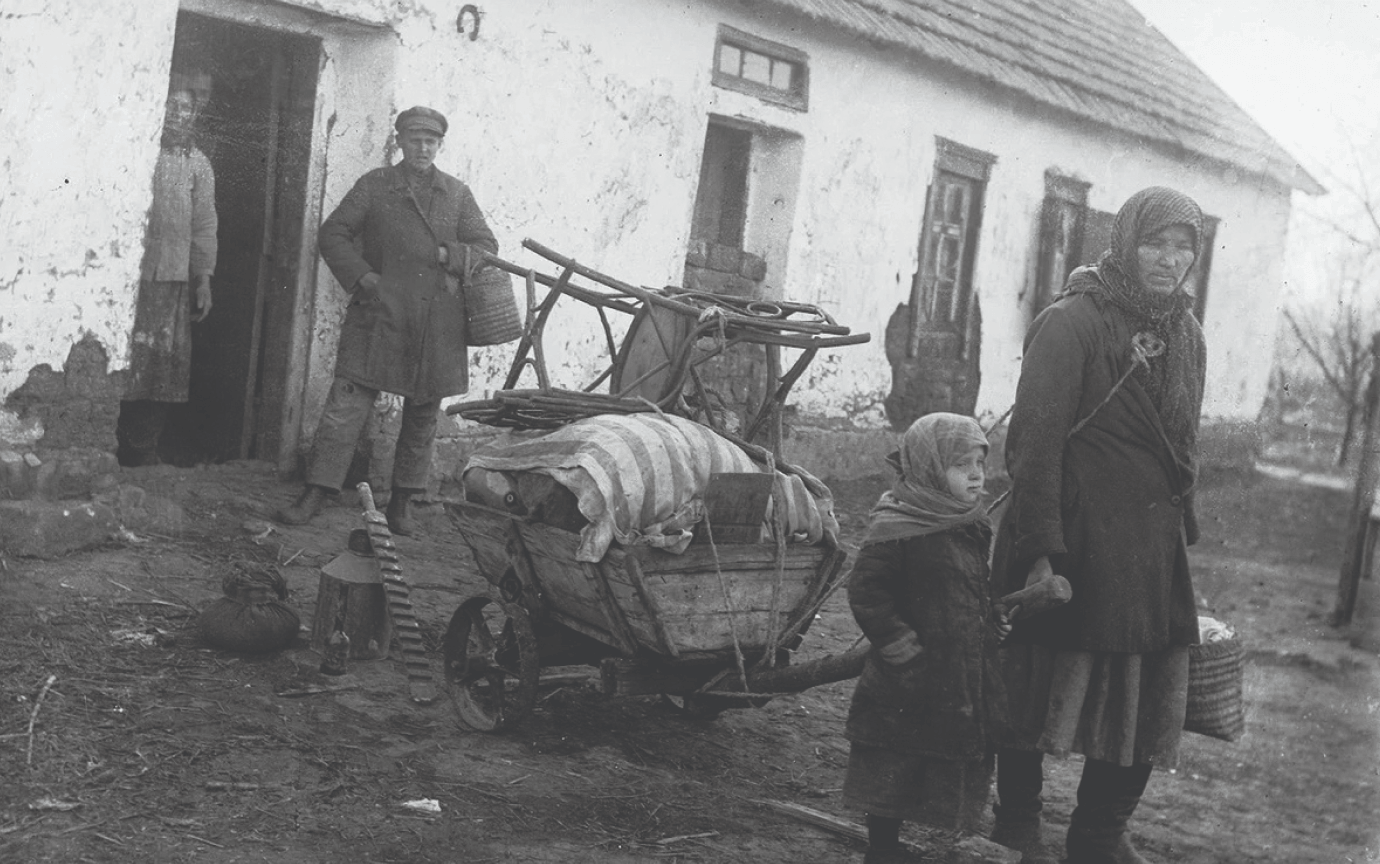
The policies of the communist totalitarian regime provoked resistance from the Ukrainian people.
Historians have recorded around 4,000 mass protests by peasants in the early 1930s against collectivisation, taxation policies, looting, terror and violence.
Realising the potential danger posed by a popular uprising, the Communist regime resorted to radical measures. Between 1932 and 1933, almost all the grain grown by Ukrainian peasants was confiscated.
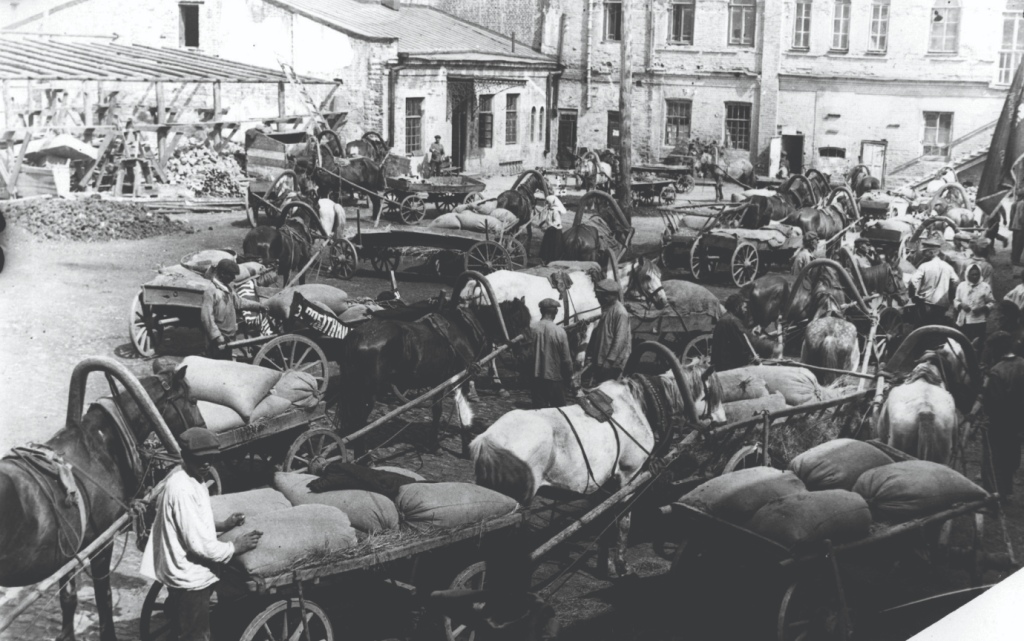
In some regions of Ukraine, farmers were deprived of 80 per cent of their harvested grain. The grain procurement quotas set for Ukraine were economically unfeasible, as were the fines for failing to meet them.
Starving people scoured the fields for ears of grain or other produce left behind after the harvest. However, on 7 August 1932, a government decree was issued, known as the ‘law of the five ears of grain’. Under this decree, the property of the collective farms was equated with state property. As a result, gathering even a few ears of grain from a collective farm field was considered ‘theft of state property’, punishable by execution or 10 years’ imprisonment with confiscation of property.
Joseph Stalin became the chief ideologist and organiser of the Holodomor
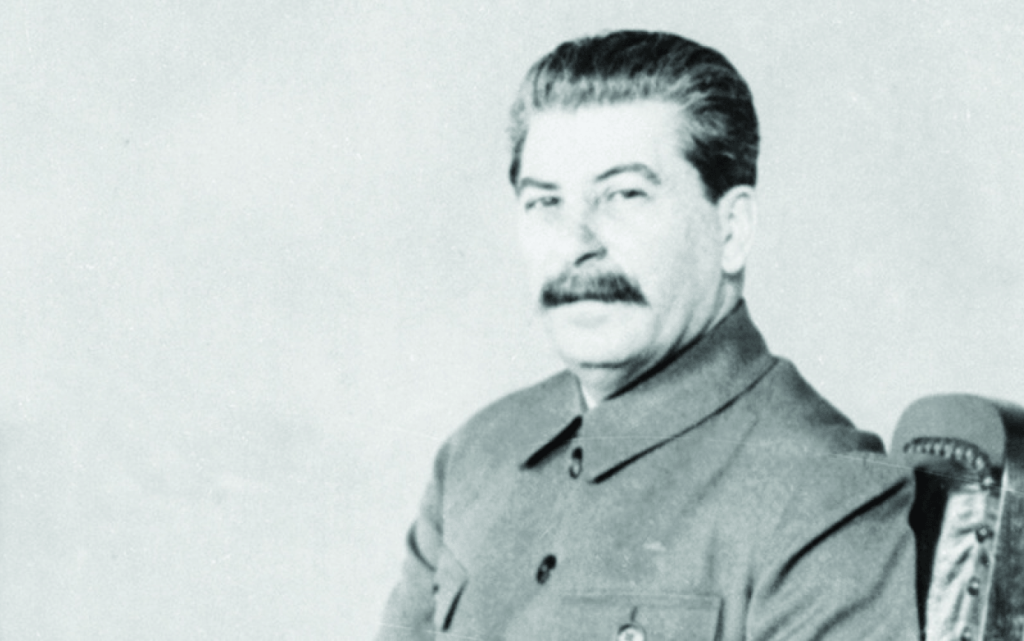
The practical implementation of the genocidal plans was carried out by the Chairman of the Council of Ministers of the USSR, Vyacheslav Molotov, and the Secretary of the Central Committee of the All-Union Communist Party(b), and the leaders of the party and state apparatus of the Ukrainian SSR: Pavlo Postyshev, Stanislav Kosior, Vlas Chubar and Mendel Khataevich.
The next genocidal measure was the introduction of fines in kind — the state’s right to seize from the peasants not only grain, but also other foodstuffs and property that could be sold or exchanged for food.
Individual villages that failed to meet their grain procurement quotas or resisted the policies of the USSR were placed on the so-called ‘blacklists’. This meant the imposition of a special punitive regime, under which such villages or even entire districts were surrounded by troops or special detachments, and all food supplies were completely confiscated from their inhabitants.
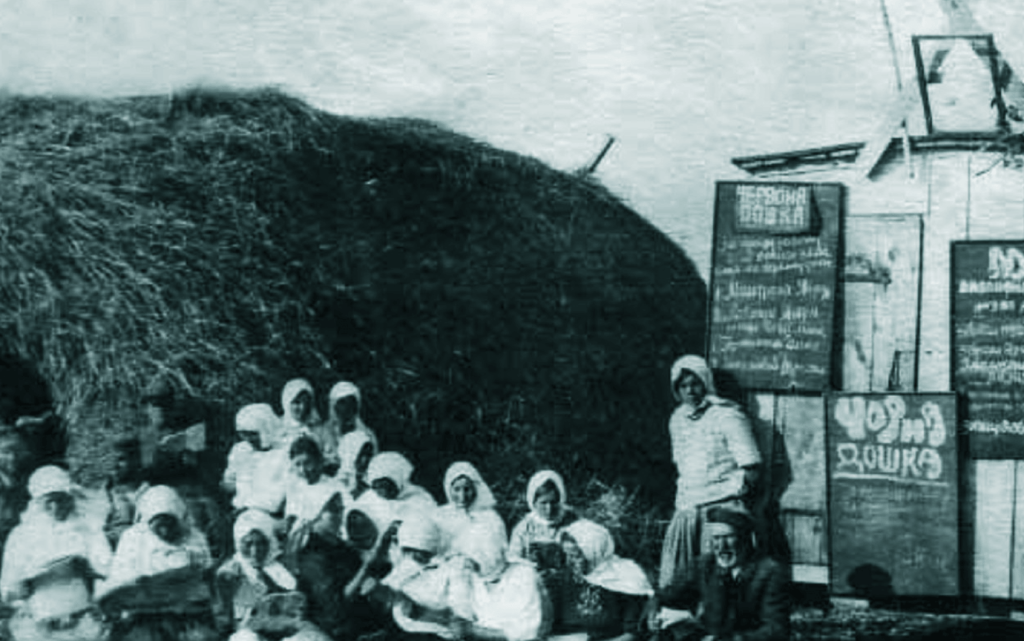
In villages placed on the ‘blacklist’, trade was banned and all goods were removed from the shops. Residents of settlements on the ‘blacklist’ were forbidden from leaving the blockaded area.
The ‘black boards’ policy was implemented only in areas inhabited by Ukrainians — in the Ukrainian SSR and in the Kuban. In other parts of the USSR, no such repressive measure existed, which clearly demonstrates the anti-Ukrainian nature of the Holodomor
Having deliberately created a situation in which Ukrainians began dying en masse from starvation, the Soviet authorities took measures to prevent them from travelling to those regions of the USSR where there was no famine. In particular, on 27 December 1932, a resolution was adopted by the Central Electoral Commission and the Council of People’s Commissars of the USSR ‘On the establishment of a unified passport system throughout the USSR and the compulsory registration of passports’.
Under the new rules, people were only allowed to live in a specific area and find employment there. Peasants were not issued with passports, so they were, in effect, deprived of the right to move freely around the country.
The Communists stationed armed checkpoints along the administrative borders of the Ukrainian SSR to prevent people from leaving Ukraine. Furthermore, Ukrainian peasants who did not have passports were not sold tickets for rail or water transport.
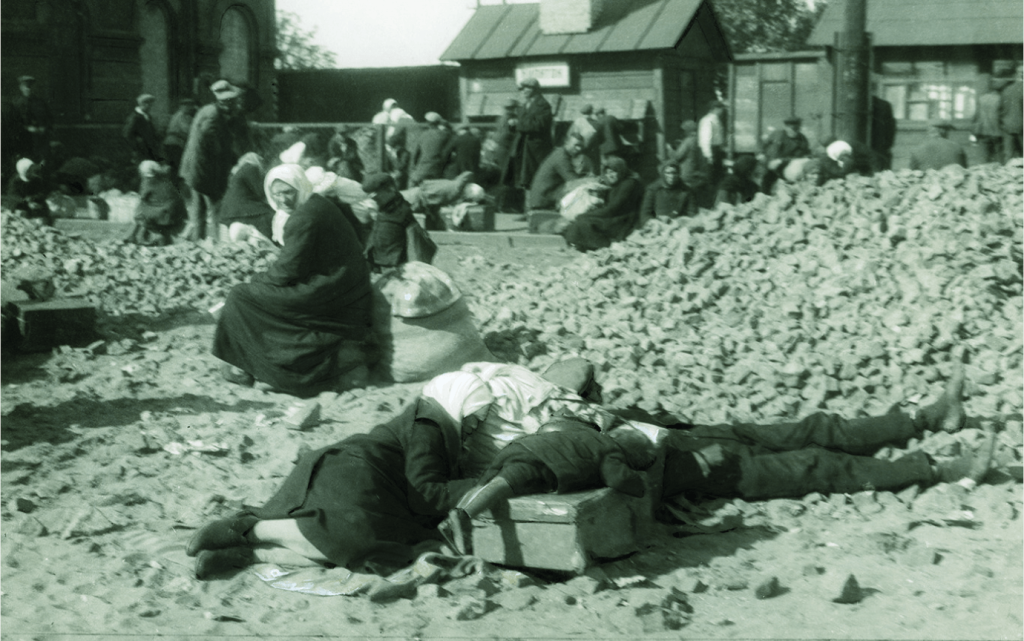
The regime cracked down particularly harshly on those who attempted to flee beyond the borders of the USSR — to Poland and Romania. The Ukrainian press in those countries at the time was full of reports of the executions of Ukrainians who had attempted to cross the Dniester and Zbruch rivers.
The death toll from starvation in Ukraine in 1932–1933 was so high that in many settlements no records of the dead were kept at all. Subsequently, the Communist regime sought to conceal the number of Ukrainians who had perished, and therefore falsified demographic data and classified archival documents.
It is known that at least 4 million Ukrainians died of starvation. However, this is not the final figure
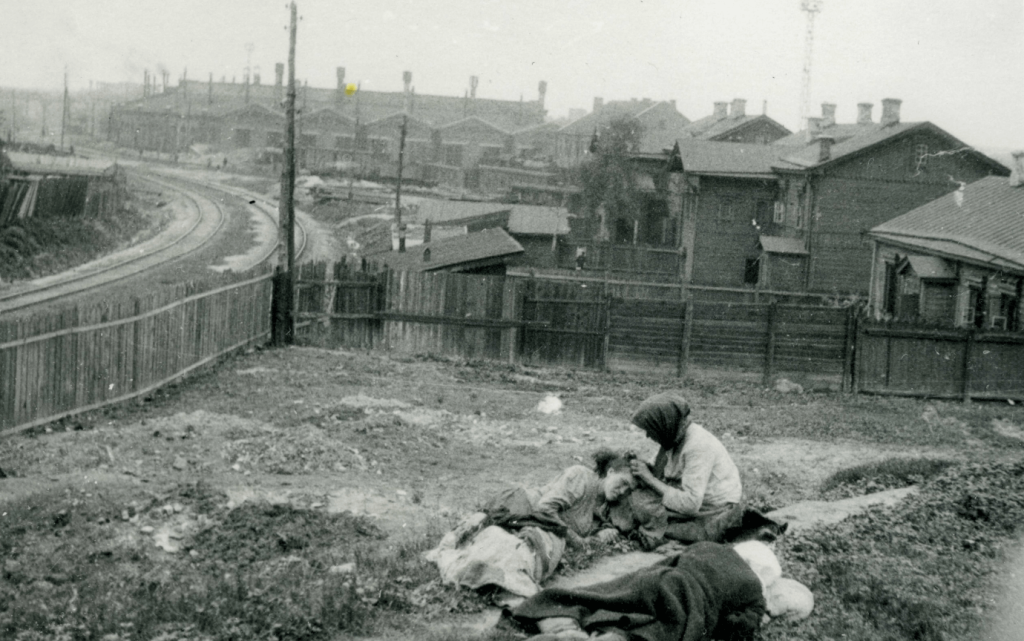
інж. А. Вінербергер. Фотодокументи надані проф. Василем Марочком (Інститут історії України НАН України). –
ЦДКФФА України імені Г. С. Пшеничного. Од. зб. 5136.
Today, historians and demographers continue to investigate this issue. However, it should be emphasised that the scale of demographic losses is not a determining factor in establishing the crime of genocide. It is our duty to compile the most accurate possible lists of the victims of the Holodomor by name. Manipulation of the figures regarding the number of Holodomor victims is unacceptable.
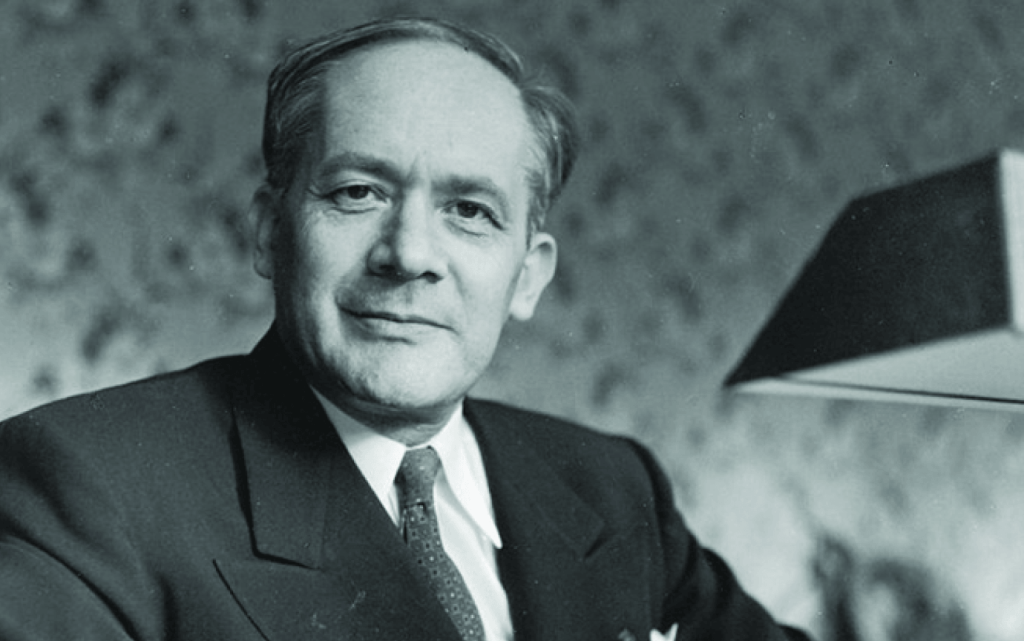
Rafał Lemkin, an American lawyer of Polish-Jewish origin, described the crimes committed by the communist regime against Ukrainians as a classic example of Soviet genocide. It was this scholar who, in 1944, brought the term ‘genocide’ into widespread use, and who later contributed to the adoption by the UN of the Convention on the Prevention and Punishment of the Crime of Genocide.
Among the materials from Rafal Lemkin’s unpublished *History of Genocides* is an essay entitled ‘The Soviet Genocide in Ukraine’, in which the lawyer explained in detail the genocidal nature of the Stalinist regime’s actions against Ukrainians. The lawyer identified four components of the plan to destroy the Ukrainian nation: the elimination of the intelligentsia (the ‘brain’ of the nation), the destruction of the Church (the ‘soul’ of the nation), the starvation of Ukrainian peasants (the main bearers of the national spirit and traditions), and the forced alteration of the ethnic composition of Ukrainian lands.
